






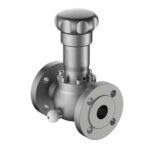
GOST Flame Arrestors for Russia: Certification and Selection Guide
Supplying tank safety equipment to Russia and the wider CIS region involves a regulatory layer that many international manufacturers underestimate: GOST standards and EAC certification. A GOST flame arrestor is not a fundamentally different device from an ISO 16852 arrestor — it is the same physics tested and documented to the Russian regulatory framework, with the EAC mark required before it can be legally installed at a facility in the Eurasian Economic Union.
This guide covers the standards, the certification path, and the selection factors that matter for Russian and CIS storage tank projects.
What “GOST” Means for Flame Arrestors
GOST (ГОСТ) is the set of technical standards originating in the Soviet system and still used across Russia and the CIS. For flame arrestors and tank safety equipment, the relevant picture has two layers:
- GOST R standards — the Russian national standards covering explosion-proof and flame-arresting equipment, and vent-sizing methodology for storage tanks. These align closely with international practice (for example GOST vent sizing parallels API 2000).
- EAC certification — the mandatory conformity mark for the Eurasian Economic Union (EAEU: Russia, Belarus, Kazakhstan, Armenia, Kyrgyzstan). Equipment supplied to these markets must carry EAC certification to be legally installed.
In practice, a “GOST flame arrestor” is a flame arrestor whose design basis references the GOST R standards and which holds EAC certification for the EAEU market — typically in addition to ISO 16852 type testing.
The EAC Certification Path
EAC certification is not a self-declaration. It involves an accredited certification body and a documented process:
| Step | Activity | Output |
|---|---|---|
| 1 | Technical documentation in Russian (design calculations per GOST R, materials, drawings) | Documentation package |
| 2 | Type testing at an accredited EAEU laboratory (flame transmission, low-temperature impact, leak rate) | Test reports |
| 3 | Factory production control audit of the manufacturer’s QMS | Audit report |
| 4 | Certificate of conformity issued; EAC mark applied per unit | EAC certificate + marking |
Because step 2 includes low-temperature impact testing, EAC certification naturally forces a clear statement of the minimum service temperature — a critical parameter for Russian installations.
Cold-Climate Design for Russian Installations
Russian and CIS storage terminals routinely see winter temperatures below −40°C, with extremes lower. This drives three design requirements that a GOST-compliant flame arrestor must satisfy:
- Low-temperature impact properties — wetted materials, typically 316L or suitable carbon steel, must have verified Charpy impact values at the design minimum temperature (commonly stated at −46°C or −50°C).
- Ice and snow shedding — the weather hood and flame element must be designed so ice and snow do not accumulate and block the flame path. A blocked flame element is both a flame-transmission risk and a venting-capacity risk.
- Seal material selection — elastomer and PTFE seals must retain performance at low temperature; standard elastomers can harden and leak.
GOST vs API 2000: Sizing Alignment
Russian vent-sizing methodology (GOST R) and API 2000 (ISO 28300) are not identical documents, but they converge on the same physical quantities: thermal breathing, liquid movement, and fire-case venting. For projects that must satisfy both — a Russian terminal shipping product to EU destinations, for example — the practical approach is to perform both sizing calculations and specify the larger required capacity. Wanan provides vent-sizing calculations referencing both methodologies.
Dual Certification and Export Orientation
Many Russian and CIS terminals ship product westward, so the safety equipment often needs to satisfy both the EAEU framework and EU/international codes. A flame arrestor can carry:
- EAC certification for legal installation in the EAEU market;
- ATEX certification (2014/34/EU) for EU-bound equipment; and
- ISO 16852 type-test compliance for the international design basis.
Dual certification lets the same equipment serve both markets, which is valuable for terminals with mixed destinations and for operators who maintain international insurance coverage.
Wanan Technology supplies EAC-certified, cold-climate-rated flame arrestors and pressure vacuum relief valves for Russian and CIS projects, with documentation in Russian and English. Our Lukoil terminal case study demonstrates this capability in practice.
Frequently Asked Questions
What is a GOST flame arrestor?
A GOST flame arrestor is a flame arrester certified to Russian GOST standards and supplied with EAC (Eurasian Conformity) certification for the Russia and CIS market. The term reflects compliance with the Russian regulatory framework, typically GOST R standards for explosion-proof equipment and flame transmission, in addition to the international ISO 16852 design basis.
What is EAC certification and why is it required for Russia?
EAC (Eurasian Conformity) is the mandatory certification mark for the Eurasian Economic Union, covering Russia, Belarus, Kazakhstan, Armenia, and Kyrgyzstan. Flame arrestors and pressure equipment supplied to these markets must carry EAC certification, which involves type testing at an accredited EAEU laboratory and Russian-language technical documentation. Equipment without EAC marking cannot legally be installed at facilities in these countries.
Which GOST standards apply to flame arrestors?
Flame arrestors for the Russian market are typically assessed against GOST R standards for explosion-proof and flame-arresting equipment, alongside the international ISO 16852 flame-transmission test basis. Vent sizing on Russian storage tanks often follows GOST R methods aligned with API 2000. Wanan supplies documentation referencing both the GOST R and international standards.
Do GOST flame arrestors need cold-climate designs?
Yes, if the facility is in a cold region. Russian and CIS installations frequently see winter temperatures below -40 C, so materials must have verified low-temperature impact properties and the flame element must shed ice and snow. Wanan’s cold-climate flame arrestors are rated to -50 C ambient with ice-shedding weather hoods.
Can a GOST flame arrestor also carry ATEX certification?
Yes, and it is common for export-oriented facilities. A flame arrestor can carry both EAC certification for the CIS market and ATEX certification for EU supply, plus ISO 16852 compliance. Dual certification lets the same equipment serve Russian installations and EU-bound shipments, which is valuable for terminals that ship product westward.
Need help specifying equipment for your facility? Wanan Technology is an ASME U-Stamp certified manufacturer of sampling systems and tank safety equipment, supplying refineries, chemical plants, and storage terminals in 40+ countries including Sinopec, PetroChina, ExxonMobil, Lukoil, and BASF. Contact our engineering team for a technical review or download the product catalog.
 English
 Russian
 Arabic
 Spanish
 Portuguese
 Chinese