






Showing all 5 results
- End of Line Breather Valves
End of Line Breather Valve
- Inline Breather Valves
In Line Breather Valve
- End of Line Breather Valve with Flame Arrestor
In Line Breather Valve with Flame Arrester
- End of Line Breather Valves
Pressure Relief Valve
- End of Line Breather Valves
Vacuum Relief Valve
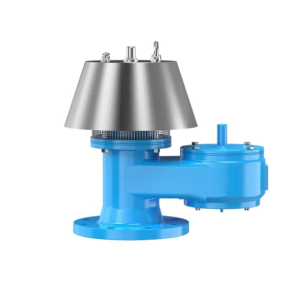

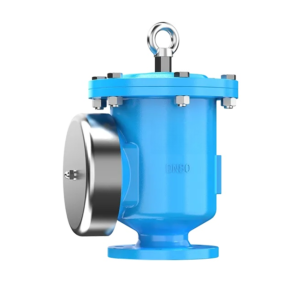

Pressure Vacuum Relief Valves for Storage Tank Protection
Pressure vacuum relief valves (PVRV), also known as breather valves or conservation vents, protect atmospheric and low-pressure storage tanks from damage caused by excessive pressure or vacuum. These valves automatically vent vapor to the atmosphere when internal pressure exceeds a preset limit, and admit air or inert gas when vacuum conditions develop. Wanan Technology manufactures API 2000 compliant pressure vacuum relief valves for petrochemical, oil & gas, and chemical storage applications, helping operators reduce evaporative losses, protect tank integrity, and meet environmental and safety regulations.
Without proper venting, a sealed tank can deform, rupture, or collapse during routine filling, emptying, or thermal cycling. A correctly sized PVRV maintains the tank within its design pressure range while minimizing product loss and fugitive emissions. Wanan PVRVs are engineered for low-leakage performance, long service life, and easy field maintenance in corrosive hydrocarbon and chemical environments.
Key Features of Wanan PVRVs
- Low-leakage seat design minimizes product loss and fugitive emissions, supporting environmental compliance and reducing operator exposure.
- Spring-loaded or weight-loaded actuation covers a wide range of pressure and vacuum settings from a few millibars to several psig.
- Stainless steel and carbon steel construction with SS 304, SS 316L, and special alloy trim options for corrosive media.
- Optional flame arrestor integration combines venting and fire protection in one compact assembly.
- Field-adjustable set pressures allow quick tuning to changing process conditions without removing the valve.
- API 2000, ISO 28300, and ATEX compliance ensures global acceptance in refinery, terminal, and chemical plant projects.
Types of Pressure Vacuum Relief Valves
Wanan supplies several PVRV configurations to match tank design, operating pressure, and required flow capacity:
- Pressure relief valve — vents excess vapor to the atmosphere or a closed recovery system when tank pressure rises above the set point.
- Vacuum relief valve — opens to admit air or inert gas when tank pressure drops below atmospheric, preventing collapse during pump-out or cooling.
- Pressure-vacuum combination valve — combines both functions in one housing, reducing installation footprint and maintenance points.
- Pilot-operated valve — uses a pilot to achieve precise opening pressure and high flow capacity for large storage tanks and high vapor loads.
For applications requiring fire protection, PVRVs can be paired with an ISO 16852 flame arrestor or combined with an emergency relief valve on a vent manifold.
Specifications
| Model | Size Range | Body Material | Pressure Setting | Vacuum Setting | Standard |
|---|---|---|---|---|---|
| W-PVRV-01 | 2" – 12" | SS 304 / SS 316L | 0.5 – 15 psig | 0.5 – 5 psig | API 2000 |
| W-PVRV-02 | 2" – 12" | Carbon Steel | 0.5 – 15 psig | 0.5 – 5 psig | API 2000 |
| W-PVRV-PO | 3" – 16" | SS 316L / Special Alloy | Custom | Custom | API 2000 / ISO 28300 |
Applications
Our pressure vacuum relief valves are installed on storage tanks across the hydrocarbon and chemical industries:
- Crude oil storage tanks and tank farms
- Refined product terminals (gasoline, diesel, jet fuel, kerosene)
- Petrochemical and chemical storage (benzene, xylene, methanol, solvents)
- LNG and LPG receiving and distribution terminals
- Edible oil, pharmaceutical, and specialty chemical tanks
Each application is reviewed for vapor group, temperature, corrosion potential, and local emissions requirements before final valve selection.
Certifications and Standards
Wanan PVRVs are designed, tested, and documented in accordance with internationally recognized standards:
- API 2000 — Venting Atmospheric and Low-Pressure Storage Tanks, the primary reference for PVRV sizing and performance.
- ISO 28300 — Petroleum, petrochemical and natural gas industries — venting of atmospheric and low-pressure storage tanks.
- ATEX — Equipment for potentially explosive atmospheres for EU and similar markets.
- EAC — Eurasian Conformity for Russia, Kazakhstan, Belarus, and CIS project acceptance.
Certification packages including material certificates, pressure test reports, and inspection records are available on request.
How to Select a Pressure Vacuum Relief Valve
- Define the tank design envelope. Record the maximum allowable working pressure (MAWP) and maximum allowable vacuum.
- Calculate venting capacity. Use API 2000 or ISO 28300 to determine required flow for normal venting, emergency venting, and thermal outbreathing.
- Choose materials. Match body, seat, and trim materials to the stored product, chloride content, H2S level, and temperature.
- Specify leakage class. Select low-leakage seats if VOC emissions or odor control are regulated.
- Plan for fire protection. Specify an integrated flame arrestor or emergency vent if the tank stores flammable liquids.
For detailed sizing guidance, review our technical resources or contact our engineering team with your tank data.
Frequently Asked Questions
What is the difference between a PVRV and a flame arrestor?
A pressure vacuum relief valve controls tank pressure and vacuum. A flame arrestor stops external flames from entering the tank through the vent. The two can be combined on a single vent stack for simultaneous protection.
What standard covers PVRV sizing?
API 2000 and ISO 28300 are the primary standards for sizing and selecting atmospheric and low-pressure storage tank venting devices.
Can PVRVs reduce emissions?
Yes. Low-leakage seat designs reduce evaporative losses and help meet environmental regulations such as EPA and local VOC control requirements.
What materials are available?
Wanan offers SS 304, SS 316L, carbon steel, and special alloys on request. Trim and seal materials are selected for the specific product and temperature.
Do you offer custom set pressures?
Yes. Set pressure, vacuum setting, connection size, and material configuration can be tailored for each project.
Can a PVRV be mounted with a flame arrestor?
Yes. Wanan provides combined PVRV and flame arrestor assemblies certified for use in explosive atmospheres.
Contact Wanan Technology for a pressure vacuum relief valve quotation or technical support.
 English
 Russian
 Arabic
 Spanish
 Portuguese
 Chinese