






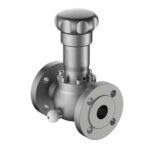
Petrochemical Sampling Supplier: What to Evaluate Before You Buy
Sampling is the point where the entire analytical chain either succeeds or fails. A petrochemical sampling supplier that provides representative, vapor-tight samples of refinery and chemical streams is protecting far more than a lab result — it is protecting operator safety, product quality, and the credibility of every process decision made from that data. This guide walks through the criteria that distinguish a capable sampling supplier from a component vendor.
Whether you are modernizing open-loop grab sampling or specifying a new closed-loop system for an analyzer, the supplier you choose determines sample integrity, emissions, and export-equipment compliance.
Why Sampling Suppliers Are Not Interchangeable
Petrochemical streams are hostile to samples. Light ends flash off during open transfer, volatile organic compounds (VOCs) escape to atmosphere, hydrogen sulfide and benzene create exposure hazards, and heavy or viscous streams plug narrow-bore tubing. A sampling supplier that understands these failure modes designs the whole path — probe, transport, conditioning, and collection — not just the cylinder.
The core product families a capable petrochemical sampling supplier should deliver:
- Closed loop sampling systems — for volatile and hazardous liquid/gas streams.
- Sampling cylinders — constant-pressure (piston) and standard cylinders.
- Sampling fittings — probes, needle valves, fast-loop components.
- Floating suction units — for tanks with variable liquid level.
Evaluation Criteria for a Sampling Supplier
| Criterion | What to Look For | Red Flag |
|---|---|---|
| Closed-loop capability | Vapor-tight, emissions-free designs rated to process pressure | Only open-loop grab kits offered |
| Material range | 316L, duplex, Alloy 20, Monel; sour-service (NACE MR0175) compliance | 316 SS only |
| Pressure rating | Cylinders and panels rated to the highest process pressure in scope | Vague or unspecified ratings |
| Sample integrity | Constant-pressure piston cylinders for volatile streams | Standard cylinders offered for LPG/gasoline |
| Documentation | EN 10204 3.1 material certs, pressure-test reports, O&M manuals | “Certificate available on request” |
| Export certifications | ATEX, EAC, DOT/TPED for cylinders as applicable | No certification path for export markets |
| Application support | Engineer reviews process conditions and sizes the system | Offers only a product list |
Sample Integrity: The Test That Matters
Ask a prospective supplier one question: “For my naphtha stream at 3 MPa, which cylinder prevents light-end loss?” The correct answer is a constant-pressure piston cylinder, where a spring-loaded piston maintains the sample at (or above) the process vapor pressure throughout collection and transport. A standard cylinder — even a good one — will flash the light ends and corrupt Reid Vapor Pressure and distillation analysis. A supplier that recommends the same cylinder for every stream has not understood the application.
Closed-Loop vs Open-Loop Sampling
| Factor | Open-Loop (Grab) | Closed-Loop |
|---|---|---|
| Operator exposure | Direct contact with process fluid/vapor | Sealed, no direct contact |
| VOC emissions | 0.5–2 L per sample event | Near zero |
| Sample representativeness | Poor for volatile streams | High (pressure maintained) |
| Regulatory fit | Increasingly non-compliant | Meets modern HSE requirements |
| Cycle time | Slower, manual | Faster, repeatable |
For nearly all refinery and petrochemical service today, closed-loop sampling is the standard; open-loop persists mainly in legacy and low-hazard applications. A supplier whose default recommendation is still open-loop grab sampling is behind current best practice.
Materials and Certification for Sour and Export Service
Two situations demand extra scrutiny of a supplier’s materials capability. First, sour service (streams containing H2S): all wetted parts must meet NACE MR0175 / ISO 15156, typically hardened 316L or duplex stainless with specialized seals. Second, export-bound cylinders: those shipping across borders may require DOT (US), TPED (EU transportable pressure equipment), or EAC certification, in addition to ASME or GB design compliance. A supplier serving global markets will have these certifications in place; a regional vendor may not.
Lead Time, References, and Support
Finally, evaluate the commercial and support profile:
- Lead time — custom sampling panels take 6–10 weeks; standard cylinders ship from stock. Confirm both.
- References — ask for customers in a comparable service (refinery, chemical, LNG). Named references in the petrochemical sector are a strong signal.
- Commissioning support — purge procedures, operator training, and start-up assistance reduce the risk of misuse that erodes sample quality.
- Spare parts — seals, gaskets, and replacement cylinders should be available on a stated lead time.
Wanan Technology supplies closed-loop sampling systems, cylinders, and fittings to petrochemical operators in 40+ countries, with sour-service and export certifications available. Review the catalog or talk to our engineers about your process conditions.
Frequently Asked Questions
What should I look for in a petrochemical sampling supplier?
Prioritize closed-loop, vapor-tight designs; a material range covering 316L, duplex, and sour-service alloys; cylinders rated to your highest process pressure; and full documentation including EN 10204 3.1 material certificates. Ideally the supplier reviews your process conditions and sizes the sampling system rather than simply selling components.
Why does sample integrity depend on the supplier?
Sample integrity depends on matching the collection method to the stream. Volatile streams such as naphtha or LPG require constant-pressure piston cylinders to prevent light-end loss; using a standard cylinder corrupts RVP and distillation results. A supplier that understands these distinctions specifies the correct cylinder for each stream, protecting both data quality and safety.
Do I need a different supplier for sour service?
Not necessarily a different supplier, but the supplier must be able to deliver NACE MR0175 / ISO 15156 compliant materials throughout the wetted path, typically hardened 316L or duplex stainless steel with sour-service seals. Confirm this capability before ordering, since standard 316 SS equipment is not suitable for wet H2S service.
What certifications do sampling cylinders need for export?
Cylinders designed per ASME or GB are the design baseline. For transport and export, DOT (US), TPED (EU transportable pressure equipment), or EAC (EAEU) certification may apply depending on the destination. A supplier serving global markets should hold the relevant certifications rather than treating them as a custom project.
How long does it take to get a closed-loop sampling system?
Custom sampling panels typically take 6 to 10 weeks from design approval to shipment, while standard cylinders and fittings ship from stock. Always confirm whether the quoted item is a stock or made-to-order product, as the lead-time difference is significant for project scheduling.
Need help specifying equipment for your facility? Wanan Technology is an ASME U-Stamp certified manufacturer of sampling systems and tank safety equipment, supplying refineries, chemical plants, and storage terminals in 40+ countries including Sinopec, PetroChina, ExxonMobil, Lukoil, and BASF. Contact our engineering team for a technical review or download the product catalog.
 English
 Russian
 Arabic
 Spanish
 Portuguese
 Chinese