






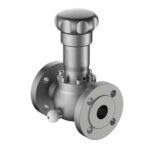
Flame Arrestor vs Pressure Vacuum Valve: Which One Do You Need?
If you’re designing or upgrading a storage tank safety system, you’ve probably asked this question: Do I need a flame arrestor, a pressure vacuum relief valve, or both? The short answer is that these two devices serve fundamentally different functions — one protects against fire propagation, the other manages pressure equilibrium. Yet they’re frequently confused because both are installed on tank vents and both are critical to storage safety.
This guide clears up the confusion once and for all. We’ll break down what each device does, compare them side by side, and help you decide which one (or combination) your application requires.
What Is a Flame Arrestor?
A flame arrestor is a passive safety device designed to stop flames from propagating through piping systems into — or out of — vessels that contain flammable gases or vapors. It works by forcing an ignited gas mixture through a narrow channel (the flame arrester element) where the heat is absorbed by the channel walls, quenching the flame before it can reach the other side.
Key characteristics:
- Primary function: Prevents flame transmission (fire safety)
- Installation location: End-of-line (tank vents) or in-line (piping systems)
- Critical parameters: Gas group classification (IIA/IIB/IIC), Maximum Experimental Safe Gap (MESG), operating temperature
- Common standards: ISO 16852, EN ISO 16852, ATEX, EAC
- Aplicaciones habituales: Fuel storage tanks, chemical processing vessels, vapor recovery units
What Is a Pressure Vacuum Relief Valve (PVRV)?
A válvula de alivio de presión y vacío — also called a breathing valve, vent valve, or PVRV — automatically regulates the internal pressure of atmospheric or low-pressure storage tanks. When liquid is pumped into a tank, air must escape; when liquid is drawn out, air must enter to prevent implosion. The PVRV opens at preset set pressures to allow this airflow while maintaining the tank’s design pressure limits.
Key characteristics:
- Primary function: Protects against overpressure and vacuum conditions (mechanical integrity)
- Installation location: Tank roof nozzle (typically on top of the vessel)
- Critical parameters: Set pressure, back pressure, flow capacity (CFH/m³/h), API 2000 sizing requirements
- Common standards: API 2000, API 520, EN 14015
- Aplicaciones habituales: Oil storage tanks, petrochemical terminals, water treatment facilities
Side-by-Side Comparison: Flame Arrestor vs PVRV
| Criteria | Apagallamas | PVRV (Breathing Valve) |
|---|---|---|
| Core Purpose | Stop fire/flame from spreading through vent lines | Regulate tank internal pressure within safe limits |
| Safety Function | Fire prevention / explosion protection | Mechanical protection (prevent rupture/implosion) |
| Operating Mechanism | Passive flame quenching via element matrix | Weighted or spring-loaded pallet opens at set pressure |
| Trigger Condition | Ignition event (flame enters vent line) | Pressure/vacuum exceeds preset threshold |
| Regulatory Standards | ISO 16852, ATEX, EN ISO 16852 | API 2000, API 520, EN 14015 |
| Required Certifications | Type approval for gas groups (IIA/IIB/IIC), MESG testing | Flow-tested per API 2000 procedures |
| Typical Cost Range | $300 – $5,000+ (depending on type/size/material) | $500 – $8,000+ (depending on size/material/pallet type) |
| Lifespan | Element replacement every 2-5 years (inspection dependent) | Pallet/seat maintenance every 1-3 years; body lasts 10-20 years |
| Can They Be Combined? | Yes — often installed on the outlet of a PVRV | Yes — PVRV + flame arrestor is a common configuration |
The Critical Question: When to Use Each
Use a Flame Arrestor When…
- Your tank stores flammable liquids (gasoline, diesel, solvents, alcohols) whose vapors could ignite
- Vent pipes are located near potential ignition sources (electrical equipment, hot surfaces, vehicle traffic)
- Local regulations, insurance requirements, or plant standards mandate flame protection
- You have an in-line process system where flashback risk exists between connected vessels
- You’re complying with ATEX Zone 1/2, NFPA 30, or similar flammable area classifications
Use a PVRV When…
- You have any atmospheric or low-pressure storage tank (oil, fuel, chemicals, water)
- Tanks experience regular filling/pumping operations that create pressure changes
- Ambient temperature swings cause thermal breathing (day-night cycles)
- You need to protect against tank collapse under vacuum during pump-out operations
- Your facility follows API 2000 guidelines for tank venting
Use Both Together When…
This is the most common scenario in petrochemical and oil & gas facilities. The typical installation looks like this:
- PVRV mounted on the tank roof nozzle — handles normal breathing (in-breathing and out-breathing)
- End-of-Line (EOL) flame arrestor installed downstream of the PVRV — prevents external ignition sources from traveling back into the tank
- In some configurations, an in-line detonation arrestor is used if long vent runs create deflagration-to-detonation transition risks
This “PVRV + Flame Arrestor” combination provides complete protection: mechanical integrity y fire safety in a single integrated solution.
How to Choose: A Quick Decision Guide
- Identify your stored product: Is it flammable? If yes → flame arrestor needed. If no → PVRV alone may suffice.
- Determine your regulatory environment: Check NFPA 30, API 2000, local codes, and insurance requirements. Some mandate both devices.
- Evaluate vent pipe geometry: Long vertical runs increase detonation risk → may need in-line detonation arrestor instead of just EOL.
- Check operating conditions: Temperature extremes, corrosive atmospheres, and high-flow scenarios affect material selection for both devices.
- Consult a specialist: For complex multi-tank farms or high-hazard applications, a professional assessment ensures proper device selection and sizing.
Errores comunes que hay que evitar
- Assuming a PVRV replaces a flame arrestor — These are not interchangeable. A PVRV does nothing to stop flame transmission. Many facilities install only a PVRV and leave themselves exposed to flashback risk.
- Installing the wrong gas group flame arrestor — Using Group IIA when your vapors require IIC creates a dangerous false sense of security. Always verify your actual gas composition.
- Oversizing the PVRV — Bigger isn’t always better. An oversized PVRV may chatter (rapid opening/closing), causing premature wear and eventual failure.
- Neglecting flame arrestor element inspection — Elements corrode, clog, or degrade over time. Without periodic inspection, a flame arrestor can become a blockage hazard rather than a safety device.
- Ignoring API 2000 for PVRV sizing — Guessing the required venting capacity leads to undersized valves that cannot handle peak inflow/outflow rates. Follow API 2000 calculations or use a certified sizing tool.
Preguntas frecuentes
Can a flame arrestor replace a PVRV?
No. A flame arrestor has no pressure-regulating capability. It does not open or close based on tank pressure — its element matrix is always open to flow. You still need a PVRV (or equivalent pressure relief mechanism) to protect the tank’s structural integrity.
Can a PVRV stop flames from entering a tank?
Generally no. While some specialized PVRVs incorporate limited flame-arresting features (such as wire mesh screens), they do not provide certified flame-stopping performance per ISO 16852. For reliable flame protection, always use a properly certified flame arrestor.
Do I really need both on my fuel storage tank?
For most fuel storage applications storing Class I, II, or IIIA liquids, the answer is yes. Industry best practice (NFPA 30, API standards, and most insurance carriers) recommends both devices for tanks containing flammable liquids with external venting.
What happens if my PVRV fails closed?
If a PVRV fails in the closed position, the tank has no way to relieve pressure during filling or draw air during emptying. This can lead to tank rupture (overpressure) or collapse (vacuum). Regular maintenance and testing per API 2000 recommendations is essential.
How often should flame arrestor elements be replaced?
It depends on service conditions. In clean, non-corrosive service: inspect annually, replace every 3–5 years. In corrosive, fouling, or high-moisture environments: inspect every 6 months, replacement may be needed as often as yearly. Always follow the manufacturer’s specific guidance.
Which costs more to maintain: flame arrestor or PVRV?
Over the full lifecycle, PVRV maintenance tends to cost more due to moving parts (pallets, seats, gaskets, springs). However, flame arrestor element replacements can be expensive for large-diameter or exotic-alloy units. Budget for routine inspections and scheduled component replacement for both devices.
Conclusion
The choice between a flame arrestor and a válvula de alivio de presión y vacío isn’t an either/or decision — it’s about understanding what each device does and matching them to your specific application. In most petrochemical and oil & gas installations, you’ll end up using both together as part of a layered tank safety strategy.
Whether you’re specifying new equipment, upgrading existing tank farms, or troubleshooting a compliance issue, getting the right combination matters. An undersized PVRV or a mis-specified flame arrestor can leave critical gaps in your safety system.
Need help selecting the right devices for your application? Wanan Technology offers a full range of certified flame arrestors (ISO 16852, ATEX approved) and API 2000-compliant pressure vacuum relief valves for global markets. Browse our flame arrestor products or explore our PVRV lineup, or contact our engineering team for a free consultation on your project requirements.
 English
 Russian
 Arabic
 Spanish
 Portuguese
 Chinese