






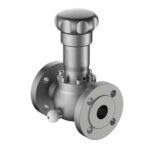
ISO 16852 Flame Arrestor Standard Explained: A Practical Compliance Guide for 2026
If you specify, purchase, or operate industrial flame arrestors, you have almost certainly encountered ISO 16852. But what does this standard actually require? Which parts apply to your installation? And how do you verify that your flame arrestors are truly compliant? This guide cuts through the technical jargon and gives you a clear, practical understanding of ISO 16852 — what it covers, why it matters, and how to ensure compliance without overcomplicating things.
What Is ISO 16852?
ISO 16852 (officially titled “Flame arresters — Performance requirements, test methods and limits for use”) is the international standard that defines how flame arrestors must be designed, tested, and certified. Published by the International Organization for Standardization, it serves as the globally recognized benchmark for flame arrestor safety and performance.
The standard applies to both in-line flame arrestors (installed in piping systems) and end-of-line flame arrestors (installed at the open end of vent pipes or tank nozzles). It covers devices intended to prevent flame propagation in gas mixtures, vapor mixtures, and hybrid mixtures containing both gases and mists.
Why ISO 16852 Compliance Matters
- Legal requirement: Many jurisdictions explicitly reference ISO 16852 in building codes, fire codes, and occupational safety regulations. Non-compliance can result in fines, facility shutdowns, and personal liability for engineers and facility managers
- Insurance mandate: Major insurers increasingly require proof of ISO 16868-compliant flame arrestors as a condition of coverage. A fire incident with non-compliant equipment can lead to claim denial
- Safety assurance: The standard’s rigorous testing protocols (including endurance burn testing under actual operating conditions) provide objective evidence that the device will perform as expected when it matters most
- International trade: If you manufacture or export equipment, ISO 16852 certification opens doors to markets that would otherwise require re-testing to local standards
- Lifecycle cost reduction: Properly specified ISO 16852-compliant arrestors last longer and require less frequent replacement than undersized or untested alternatives
Key Requirements: What ISO 16852 Actually Specifies
ISO 16852 is organized around several core performance categories. Understanding each one helps you make informed purchasing decisions:
1. Maximum Experimental Safe Gap (MESG) Classification
The most critical parameter in flame arrestor selection is the MESG value — the maximum gap width through which a specific gas mixture will not propagate a flame. ISO 16852 classifies flame arrestors according to the MESG of the gas groups they can safely handle:
| Gas Group (IEC) | Typical Gas Example | MESG Range (mm) | Flame Arrestor Requirement |
|---|---|---|---|
| IIA | Propane, Methane | > 0.9 | Standard crimped ribbon or parallel-plate element |
| IIB | Ethylene, Town Gas | 0.5 – 0.9 | Tighter element spacing; may require special design verification |
| IIB+H2 | Ethylene + Hydrogen mixture | 0.35 – 0.5 | Enhanced element; hydrogen-capable certification required |
| CII | Hydrogen, Acetylene | < 0.35 | Finest element spacing; most stringent testing |
Critical rule: Always select a flame arrestor rated for a gas group equal to or stricter than your actual process gas. Using an IIA-rated arrestor for IIB service is a dangerous and common mistake.
2. Endurance Burn (EBL) Rating
This defines how long the flame arrestor must maintain its flame-stopping capability while exposed to a stabilized flame on its protected side. The test involves igniting a combustible mixture against the arrestor face and maintaining the burn for a specified duration without flame breakthrough or element destruction.
| EBL Category | Burn Duration Required | Typical Application |
|---|---|---|
| Short-duration EBL | 2 minutes minimum | Intermittent venting, low-risk areas |
| Standard EBL | 15–30 minutes | General industrial storage tanks |
| Extended EBL | 60–120 minutes | High-hazard processes, remote locations, offshore platforms |
| Unstable combustion EBL | Per unstable condition protocol | Possible detonation or high-velocity deflagration environments |
3. Operating Condition Limits
Every ISO 16852-certified flame arrestor comes with a defined envelope of safe operating conditions that must not be exceeded:
- Maximum allowable operating pressure (MAOP): The highest system pressure at which the device maintains its certified performance
- Maximum temperature limit: Element and housing materials have temperature limits beyond which structural integrity degrades
- Flow velocity range: Minimum and maximum gas velocities at which the element effectively stops flames
- Orientation restrictions: Some designs are certified for horizontal only, vertical only, or any orientation
- Installation position: Distance from ignition source, pipe length upstream/downstream, and presence of turbulence-generating fittings
4. Testing and Certification Protocol
ISO 16852 mandates a rigorous multi-stage testing sequence before a device can carry the certification mark:
- Hydrostatic pressure test: Verify housing integrity at 1.5 × MAWP
- Flame transmission test: Demonstrate successful flame arrestion across the full range of approved gas mixtures and flow conditions
- Endurance burn test: Sustained burn test at the certified duration category
- Pressure drop verification: Ensure flow resistance stays within declared limits
- Repeatability check: Multiple units from production batches must pass identical tests
ISO 16852 vs. Other Standards: How They Relate
| Standard | Scope | Key Difference from ISO 16852 |
|---|---|---|
| ISO 16852 | Global (international) | Most widely accepted worldwide; harmonized with EU ATEX directive |
| EN ISO 16852 | European Union | Identical technical content; carries CE marking requirement for EU market |
| UL 525 / FM 6060 | North America | Different test protocols (shorter burn times); focuses on US code compliance |
| CGA S-1.3 | Canada | Similar scope but different test conditions and acceptance criteria |
| GB/T 20801 | China | National implementation with additional domestic requirements |
Practical Compliance Checklist for Facility Managers
Use this checklist during procurement and routine inspections to ensure your flame arrestors meet ISO 16852 requirements:
- Verify the manufacturer provides a valid test certificate referencing ISO 16852 edition year and listing all tested parameters (gas group, MAOP, EBL rating, temperature range)
- Confirm the selected gas group matches or exceeds your actual process gas composition — if uncertain, request a gas analysis and consult the manufacturer
- Check that the EBL rating matches or exceeds the worst-case scenario exposure time for your installation location
- Ensure installation follows manufacturer-specified guidelines: correct orientation, proper support, adequate drainage, no bypass paths, correct gasket material
- Establish a documented inspection schedule per manufacturer recommendations (typically annual visual inspection plus functional testing every 2 years)
- Maintain records of all inspections, tests, repairs, and replacements — this documentation is essential during audits and insurance reviews
- Never modify, repair, or clean a flame arrestor element using methods not explicitly approved by the manufacturer — improper maintenance voids the ISO 16852 certification
Frequently Asked Questions About ISO 16852
Is ISO 16852 mandatory by law?
It depends on your jurisdiction and industry. In the European Union, EN ISO 16852 is effectively mandatory for flame arrestors used in ATEX-classified zones via the Pressure Equipment Directive and ATEX Directive. In the United States, OSHA references NFPA standards rather than ISO directly, but NFPA 69 (on explosion prevention systems) accepts ISO 16852-certified equipment as compliant. In China, GB standards often incorporate ISO 16852 by reference. When in doubt, consult your local authority having jurisdiction (AHJ) or a qualified compliance engineer.
How long is an ISO 16856 certificate valid?
The certification itself does not expire, but the device has a limited service life. Manufacturers typically warrant their flame arrestors for 5–10 years depending on service conditions. After that period — or after any event where the device was exposed to flame, extreme temperature, physical damage, or contamination — it must be inspected, retested, or replaced. The ISO 16852 certificate documents the original factory test results; ongoing field performance requires your inspection program.
Can I repair an ISO 16852 flame arrestor myself?
In general, no. ISO 16852 Section 8 specifically addresses maintenance requirements and states that repairs involving element replacement, housing modification, or reseating operations must be performed by the manufacturer or an authorized service center using OEM-specified procedures and replacement parts. Field cleaning of external surfaces is acceptable, but disassembly, internal cleaning, or element handling by unqualified personnel voids the certification. Wanan Technology offers factory recertification services for all our flame arrestor products.
What happens if I install the wrong gas group?
Installing a flame arrestor with insufficient MESG rating (for example, using Group IIA for Group IIB gas service) means the element gaps are too wide to stop flame propagation in your actual gas mixture. In a deflagration event, the flame will pass straight through — rendering the device useless while giving a false sense of protection. This is one of the most dangerous compliance failures in industrial practice and has been identified as a root cause in multiple post-incident investigations. Always match or exceed the gas group.
Does ISO 16852 cover detonation flame arrestors?
Yes — the current edition of ISO 16852 includes provisions for both deflagration e detonation flame arrestors. Detonation arrestors undergo additional testing including stable and unstable detonation propagation tests at velocities exceeding 2000 m/s. However, not every ISO 16852-certified device is rated for detonation service. You must specifically select a model with detonation certification if your application involves long pipe runs (typically > 3 meters between ignition source and arrestor) where deflagration-to-detonation transition (DDT) is possible.
Need ISO 16852-compliant flame arrestors for your project? Wanan Technology manufactures a complete range of ISO 16852-certified flame arrestors covering all gas groups (IIA/IIB/IIB+H2/IIC), both in-line and end-of-line configurations, with EBL ratings up to extended duration. Every unit ships with full traceability documentation. Browse our flame arrestor product catalog or contact our team for a compliance assessment.
 English
 Russian
 Arabic
 Spanish
 Portuguese
 Chinese