






PVRV 是如何運作的?壓力真空釋放閥完整技術指南 (2026)

編輯標準: 本文經由擁有 20 多年石化設備製造經驗的 Wanan Technology 工程人員審閱。內容參照 API、ISO、ASME 及 ATEX 標準。. 關於我們的團隊.

How Does a Pressure Vacuum Relief Valve Work? A Complete Technical Guide

Pressure vacuum relief valves (PVRVs) are among the most critical safety devices in industrial storage tank operations. Whether you manage petroleum terminals, chemical processing plants, or pharmaceutical manufacturing facilities, understanding how a PVRV works is essential for maintaining safe operations and regulatory compliance. This guide breaks down every aspect of PVRV functionality — from basic principles to real-world applications — in plain language.

What Is a Pressure Vacuum Relief Valve?

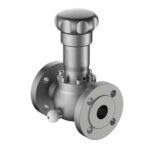
A pressure vacuum relief valve (also known as a breather valve, pressure vacuum vent valve, or simply PVRV) is a protection device mounted on top of atmospheric and low-pressure storage tanks. Its primary function is to automatically regulate the internal tank pressure by allowing air or vapor to escape when internal pressure builds up, and drawing air in when vacuum conditions develop inside the tank.

Without a properly functioning PVRV, a storage tank faces two catastrophic risks:

  • Over-pressure can cause tank rupture, product loss, fire hazards, and environmental contamination
  • Excessive vacuum can cause tank implosion (“pancaking”), structural collapse, and equipment damage

The PVRV prevents both scenarios through its dual-action design — one mechanism handles excess pressure while another handles vacuum conditions.

The Core Working Principle: Two-Way Protection

The fundamental principle behind any PVRV is simple: it opens when it should and stays sealed when it shouldn’t. The device maintains a delicate balance between two opposing forces inside the storage tank.

How the Pressure Side Works (Tank Breathing Out)

The Scenario: During daytime heating, product filling, or chemical reactions that generate gas, the pressure inside the tank rises above the safe limit.

The Mechanism:

  1. Sensing: The increasing internal tank pressure pushes upward against the pressure pallet (or pressure disc) inside the PVRV body
  2. Overcoming Resistance: When pressure exceeds the pre-set “set pressure” (typically 2–16 oz/in² or 0.5–4 kPa), it overcomes the weight of the pressure pallet plus the spring force holding it closed
  3. Venting: The pressure seat lifts off its seating surface, creating an opening path for vapors and air to flow out into the atmosphere
  4. Closing: As pressure drops back below the set point, gravity (from the pallet weight) and spring force push the seat back down, resealing the tank
參數Typical RangePurpose
Set Pressure2–16 oz/in² (0.5–4 kPa)Trigger point for opening
Overpressure+10% to +25% of set pressureFully open position
Blowdown-10% to -20% from set pressureResealing point

How the Vacuum Side Works (Tank Breathing In)

The Scenario: During nighttime cooling, product pumping-out (emptying), or sudden temperature drops, the pressure inside the tank drops below atmospheric pressure, creating a partial vacuum.

The Mechanism:

  1. Sensing: External atmospheric pressure pushes downward against the vacuum pallet (or vacuum disc), which sits inverted relative to the pressure side
  2. Overcoming Resistance: When the vacuum level exceeds the pre-set vacuum set point (typically 0.5–8 oz/in² or 0.1–2 kPa), external air pressure forces the vacuum seat to open inward
  3. In-breathing: Fresh atmospheric air flows into the tank, equalizing the internal pressure and preventing implosion
  4. Closing: Once pressure normalizes, the vacuum pallet’s weight (and optional spring assistance) reseals the vacuum port

Key Components Inside a PVRV

Understanding the internal anatomy helps with maintenance, troubleshooting, and selecting the right valve type:

元件FunctionMaterial Options
Body/ShellHouses all internal parts; connects to tank nozzleCarbon steel, stainless steel 304/316, aluminum
Pressure Pallet (Disc)Movable weighted plate; seals pressure ventAluminum, stainless steel, PTFE-coated
Vacuum Pallet (Disc)Movable weighted plate; seals vacuum inletAluminum, stainless steel, PTFE-coated
Seat Ring(s)Seating surface for pallets; ensures tight sealPTFE, Viton, FKM, EPDM (chemical compatibility dependent)
Spring AssemblyProvides adjustable closing force on palletsStainless steel (316 typical)
Deflector ShieldDirects vented gas away from the valve bodyStainless steel or aluminum
Flange ConnectionMounting interface to tank nozzleANSI flange, threaded, grooved

Types of PVRVs: Choosing the Right Configuration

Not all pressure vacuum relief valves are built the same. Different applications demand different designs:

1. Weight-Loaded PVRV

The most common and economical type. The pallets rely entirely on their physical weight to stay sealed. Set pressures are adjusted by adding or removing calibrated weights. Best suited for fixed-set-point applications where conditions don’t change frequently.

2. Spring-Loaded PVRV

Uses precision-calibrated springs instead of weights. Offers more accurate set points and easier field adjustment. Preferred for applications requiring frequent recalibration or tighter tolerance control.

3. Pilot-Operated PVRV

A high-performance variant where a small pilot valve controls the main valve. Provides superior sealing at high percentages of set pressure and faster response times. Commonly used in large-scale petrochemical facilities where leakage prevention is critical.

4. Emergency Vent (Pressure-Only)

Designed exclusively for emergency over-pressure scenarios (such as external fire exposure around the tank). Opens only at very high pressures — well above the normal operating range of the primary PVRV. Acts as a last line of defense against tank rupture.

類型AccuracyAdjustabilityBest ForCost Level
Weight-Loaded±15%LimitedGeneral storage tanks$
Spring-Loaded±5%Good field adjustmentVariable process conditions$$
Pilot-Operated±1%PreciseLarge petrochemical tanks$$$
Emergency VentN/AFixedFire protection backup$$

Real-World Applications: Where You’ll Find PVRVs

Pressure vacuum relief valves protect storage systems across virtually every heavy industry:

  • Oil & Gas Terminals: Crude oil storage, refined product tanks, gasoline/diesel depots — where thermal breathing from day-night temperature cycles is constant
  • Chemical Processing: Solvent storage tanks, intermediate product vessels, reactor feed tanks — handling volatile organic compounds (VOCs) that require controlled venting
  • Pharmaceutical Manufacturing: API (Active Pharmaceutical Ingredient) storage, solvent tanks — where cross-contamination must be prevented through proper sealing
  • Food & Beverage: Ethanol storage, edible oil tanks, fermentation vessels — where hygiene standards require clean-in-place (CIP) compatible materials
  • Water Treatment: Chemical dosing tank vents, chlorine storage — preventing dangerous vacuum conditions during chemical draw-down
  • Biofuels & Renewable Energy: Biodiesel, ethanol, renewable diesel storage — managing the unique breathing characteristics of bio-based fuels

PVRV vs. Other Tank Protection Devices

It’s important not to confuse a PVRV with other tank-mounted devices. Here’s how they differ:

DevicePrimary FunctionDifference from PVRV
PVRVNormal + emergency pressure/vacuum protectionHandles routine breathing AND emergencies
阻火器Blocks flame propagation into the tankDoesn’t regulate pressure; used alongside PVRV
Blanket Gas RegulatorMaintains inert gas blanket above liquidAdds gas rather than venting to atmosphere
Rupture DiscLast-resort pressure reliefSingle-use device; replaces itself after activation
Tank GaugeLiquid level measurementNo pressure regulation function at all

Maintenance: Keeping Your PVRV Reliable

A PVRV is not an install-and-forget device. Regular inspection and maintenance are critical for continued protection:

  1. Visual Inspection (Monthly): Check for physical damage, corrosion, ice buildup, or debris accumulation on the vent outlet
  2. Functional Testing (Annually): Verify that both the pressure side and vacuum side open at their correct set points using a calibrated test apparatus
  3. Seat Replacement (Every 2–3 years): Replace soft-seat gaskets (PTFE, Viton) as they harden and lose sealing effectiveness over time
  4. Recalibration (After Any Event): If the valve has operated (opened due to over-pressure or vacuum event), have it inspected and recalibrated before returning to service
  5. Documentation: Maintain a log of all inspections, tests, and adjustments — this is required by API 2000 and many local regulations

Common Mistakes When Selecting and Installing PVRVs

  • Wrong set pressure: Setting the pressure side too low causes constant venting (product loss); setting it too high risks tank damage. Always calculate based on tank design pressure, not guesswork
  • Ignoring tank breathing rate: The PVRV must be sized for your tank’s maximum expected inflow/outflow rate (pump rates, thermal effects). An undersized valve won’t provide adequate relief capacity
  • Material mismatch: Using carbon steel for a sulfuric acid tank will cause rapid corrosion. Always verify chemical compatibility between valve materials and stored products
  • Skip the flame arrestor: Many codes (NFPA 30, OSHA 1910.106) require a flame arrestor on PVRV outlets for flammable liquid storage tanks. Installing without one creates a serious compliance gap
  • Blocking the vent: Painting over, capping off, or allowing ice/snow to block the PVRV vent renders the entire protection system useless — this is one of the most commonly cited violations during facility audits

Frequently Asked Questions About PVRV Operation

What is the difference between a PVRV and a regular pressure safety valve (PSV)?

A conventional PSV only relieves excess pressure — it has no vacuum protection function. A PVRV is specifically designed with two independent mechanisms: one for pressure relief and one for vacuum protection. Additionally, PVRVs are designed for low-pressure applications (typically under 15 psi / 100 kPa), whereas PSVs handle much higher pressures in process piping systems.

How do I know what set pressure my PVRV needs?

The set pressure must be determined based on three factors: (1) the tank’s maximum allowable working pressure (MAWP), (2) the calculated breathing requirements per API 2000 standard (based on tank volume, filling/pumping rates, and thermal effects), and (3) applicable code requirements. For most atmospheric storage tanks, a pressure setting of 4–8 oz/in² (0.25–0.5 kPa) and vacuum setting of 2–4 oz/in² (0.12–0.25 kPa) are typical starting points. Consult a qualified engineer for site-specific calculations.

Can a PVRV fail in the closed position? What happens then?

Yes — this is called “sticking” or “seizure” and is usually caused by corrosion, polymer buildup from stored products, or ice formation in cold climates. If a PVRV fails closed during an over-pressure event, pressure continues to build until either the emergency vent opens or the tank ruptures. If it fails closed during a vacuum event, the tank may implode. This is why annual testing is mandatory under most industrial safety codes.

Do I need a flame arrestor on my PVRV?

For tanks storing flammable liquids, yes in almost all cases. NFPA 30 (Flammable and Combustible Liquids Code) requires an approved flame arrestor or other means of deflagration protection on tank vents unless the tank is inerted. The flame arrestor is typically installed on the outlet side of the PVRV, forming an integrated protection assembly. Wanan Technology offers combined PVRV-flame arrestor units that simplify installation and ensure code compliance.

How often should I replace the seal/gasket in my PVRV?

Most manufacturers recommend replacing soft seats (PTFE, Viton, FKM, EPDM) every 2 to 3 years under normal service conditions. However, if the stored product contains abrasive particles, solvents that swell elastomers, or operates at extreme temperatures, replacement may be needed annually. Hardened or cracked seats cause the valve to leak — leading to product loss, emissions violations, and potential ignition sources near the tank top.

Can one PVRV serve multiple tanks?

While technically possible via a manifold header system, this practice is generally not recommended. Sharing one PVRV between tanks creates several problems: (1) the sizing calculation becomes extremely complex since each tank’s breathing events could overlap, (2) isolation valves introduce failure points (if someone closes a valve, the connected tank loses protection), and (3) most codes including API 2000 require each tank to have its own dedicated venting device. One PVRV per tank is the industry best practice.


Need help sizing or selecting the right PVRV for your application? Wanan Technology manufactures a complete range of pressure vacuum relief valves — from standard weight-loaded models to pilot-operated precision valves. Browse our PVRV product lineup or contact our engineering team for a free sizing consultation. Protect your tanks with proven reliability.

石化取樣與儲槽安全技術文章

Wanan Technology 的技術資料庫涵蓋石化取樣系統、阻火器及儲槽安全閥的工程指南、選型準則與合規標準。每篇文章均由我們的壓力容器工程師及 API 認證專家撰寫,融合了 15 年以上的製造經驗,以及遍及 30 多個國家的現場安裝實務。 無論您需要依據 API 2000 標準進行壓力真空洩壓閥的選型、選用符合 ISO 16852 認證的阻火器,或是為含硫工況指定閉環取樣系統,這些指南都能提供您所需的深入技術支援。.

精選技術指南

何謂閉環取樣系統?完整指南

對閉環取樣原理、組件及應用之全面概述。內容涵蓋零排放取樣、吹掃與回流設計,以及與開環方法之比較。對於負責為煉油廠及石化廠指定取樣系統的製程工程師而言,此為必讀資料。.

《火焰阻隔器選型完全指南》

針對迸燃與爆震型火焰阻隔器的逐步選型方法。內容涵蓋 ISO 16852 分類標準、管線末端與管線內應用之區別、溫度等級,以及適用於腐蝕性工況的材質選用。並包含儲槽排氣管與蒸氣回收系統的實際範例。.

阻火器與 PVRV:您需要哪一種?

直接比較火焰阻斷器與壓力真空洩壓閥——這兩種功能各異的關鍵儲槽安全裝置。本文說明何時需要使用各自裝置、它們如何協同運作,以及可能危及儲槽安全的常見配置錯誤。.

PVRV 是如何運作的?完整技術指南

深入探討壓力真空通氣閥的運作原理。內容涵蓋彈簧式與配重式設計的比較、設定壓力計算、閥座密封性,以及 API 2000 的排氣要求。並包含維護要訣與常見故障模式。.

API 2000 儲槽通氣管尺寸選定指南(附解題範例)

根據 API 2000 標準,針對大氣儲存槽排氣管尺寸選定之實務指南。內容涵蓋因液體抽取及熱收縮所產生的吸氣、因液體注入及熱膨脹所產生的排氣,以及火災情況下的排氣。其中包含針對 10,000 桶容量儲存槽的分步計算說明。.

ISO 16852 火焰阻隔器標準解析

以淺顯易懂的語言闡述國際火焰阻斷器性能標準。內容涵蓋燃燒測試與爆震測試的區別、工作溫度分級,以及如何解讀火焰阻斷器認證標籤。對合規工程師和採購團隊而言至關重要。.

ATEX 火焰阻隔器要求 | 歐盟合規指南

關於火焰阻隔器及取樣設備符合 ATEX 指令 2014/34/EU 的完整指南。內容涵蓋設備組別、類別、區域以及 CE 標誌要求。內含進口至歐盟的合規檢查清單。.

製程分析儀的取樣系統設計指南

本工程指南旨在協助設計能向製程分析儀提供具代表性樣本的取樣系統,內容涵蓋取樣點位置、輸送管線尺寸選定、滯後時間計算以及快速迴路設計。本指南專為儀表工程師及分析儀專家撰寫。.

閉環採樣器安裝指南

經現場驗證的閉環取樣系統安裝程序。內容涵蓋工藝連接、吹掃管路佈線、取樣筒安裝及調試檢查。並包含常見取樣問題的故障排除指南。.

緊急洩壓閥選型:逐步指南(API 2000)

儲存槽緊急洩壓閥的詳細選型方法。涵蓋火災情況下的選型、異常工藝條件,以及先導式與彈簧式閥門的選型比較。包含一個 50,000 桶原油儲存槽緊急排氣的實際範例。.

涵蓋主題

  • 採樣系統 — 閉環採樣、採樣筒、採樣接頭、與製程分析儀的整合
  • 阻火器 — 燃爆與爆震阻斷器,符合 ISO 16852 標準及 ATEX 規範,提供管線末端與管線內置配置
  • 壓力真空洩壓閥 — 根據 API 2000 標準的 PVRV 選型、彈簧式與配重式之比較、通氣閥維護
  • 緊急洩壓閥 — 火災情況下的排氣、先導式閥門、緊急排氣管徑設計
  • 標準與合規性 — API 2000、ISO 16852、ATEX 2014/34/EU、ASME U 標章、OSHA、EPA
  • 材料選用 — 316L 不鏽鋼、哈氏合金 C276、雙相不鏽鋼、適用於 H₂S 及腐蝕性環境的碳鋼

為什麼要閱讀我們的技術文章?

我們技術資料庫中的每篇文章,均由具備實際製造與現場經驗的 Wanan Technology 工程師撰寫。 我們絕不沿用通用內容——每份指南皆以真實客戶專案、實際尺寸計算,以及從中國石化、埃克森美孚、巴斯夫和盧克石油等設施的安裝案例中汲取的經驗教訓為基礎。無論您是製程工程師、採購專員還是合規專員,我們的目標都是協助您做出明智的規格決策。.

需要協助為您的應用選擇合適的設備嗎? 請聯絡我們的工程團隊 以獲得個人化推薦。.

W

瓦南工程團隊

技術工程部 · 20 年以上經驗

ASME U 標章認證製造商

Wanan Technology 的工程團隊在石化取樣系統、儲槽安全設備及壓力釋放裝置的設計與製造方面,擁有超過二十年的經驗。 我們的工程師均持有 ASME、API 及 ISO 認證,並已向 40 多個國家的煉油廠、化工廠及儲存終端供應設備,合作項目包括中國石化、中國石油、埃克森美孚、盧克石油及巴斯夫等。.

認證:ASME U 標章ISO 9001ATEXEACAPI 2000PED 2014/68/EU