






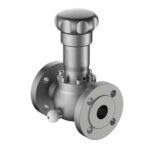
Self-Resetting Sampler Valve: Automatic Closure for Safer, More Repeatable Sampling
In a self-resetting sampler valve, the valve returns automatically to the closed position once the sample has been drawn, without the operator having to remember to close it. This small mechanical behaviour solves a large operational problem: the sample valve left open, the process fluid venting to atmosphere, and an operator exposed to a hazardous stream. For facilities moving away from manual grab sampling, the self-resetting valve is a foundational component of the 閉環採樣系統 architecture.
This article explains how self-resetting sampler valves work, how they differ from fixed-volume and conventional samplers, and where they deliver the most value.
How a Self-Resetting Sampler Valve Works
A self-resetting (also called self-closing) sampler valve integrates a spring-return or automatic closure mechanism into the sampling valve body. The operating sequence is:
- Actuate — the operator opens the valve to allow process fluid into the sample path.
- Collect — fluid flows through the valve into the collection cylinder or sample container.
- Release — as the operator releases the handle (or the cylinder reaches capacity), a spring or pressure-loaded mechanism drives the valve closed.
- Seal — the valve seats automatically, isolating the process from atmosphere and the operator.
The defining feature is step 3–4: closure does not depend on operator discipline. The valve cannot be left open by accident.
Self-Resetting vs. Fixed-Volume vs. Manual Samplers
| 類型 | Closure | Representativeness | Operator Risk |
|---|---|---|---|
| Manual sampler | Operator must close | Variable | High (valve can be left open) |
| Fixed-volume sampler | Automatic at set volume | Consistent volume | Low |
| Self-resetting sampler valve | Automatic on release / capacity | Operator-controlled to representative point | Low |
Where a fixed-volume sampler guarantees the quantity of sample, a self-resetting valve guarantees the closed state after sampling. Many closed-loop systems combine the two: a self-resetting valve ensures no open-port condition, while the piston cylinder preserves pressure and representativeness.
Where Self-Resetting Valves Deliver the Most Value
- Toxic or high-H2S streams — where an open valve is an immediate exposure event.
- High-pressure service — where a forgotten open valve can discharge a pressurized stream.
- High-frequency sampling points — where operator fatigue increases the chance of error.
- Remote or unattended locations — where a valve left open could vent for hours before being noticed.
In each case, the value of the self-resetting mechanism is that it converts a procedural safeguard (remember to close the valve) into a design safeguard (the valve closes itself). Design safeguards are inherently more reliable than procedures under real operating conditions.
Integration with Closed-Loop Sampling
The self-resetting valve is usually the process-isolation element of a closed-loop sampling system. The full flow path is:
- 探針 inserts into the process line or vessel.
- Self-resetting sampler valve provides operator-actuated, automatic-closure process isolation.
- Sample cylinder (constant-pressure piston for volatile streams) collects the sample vapor-tight.
- Return / purge path returns any excess or purge fluid to the process, eliminating emissions.
The result is a system in which the operator cannot leave the process open to atmosphere, and the sample never contacts the air. This combination is what allows closed-loop sampling to satisfy modern HSE requirements on toxic and volatile streams.
Materials and Service Considerations
| 服務 | Recommended Material / Feature |
|---|---|
| Standard hydrocarbons | 316L stainless steel body and trim |
| Sour service (H2S) | NACE MR0175 / ISO 15156 compliant, hardened trim |
| High-temperature | High-temperature spring material and seals rated to process temperature |
| Particulate-laden streams | Oversized bore / filter-protected seat to prevent sticking |
The spring or closure mechanism and the seat seals are the primary wear items. Routine maintenance should inspect seat condition, return-spring force, and seal integrity — typically annually, or more often in sour or particulate service where sticking is a risk. A well-maintained self-resetting valve should require no more attention than a conventional sampling valve, while eliminating the open-port failure mode entirely.
常見問題
What is a self-resetting sampler valve?
A self-resetting sampler valve is a sampling valve that returns automatically to the closed position once the sample is drawn, using a spring-return or pressure-loaded closure mechanism. The operator cannot leave it open by accident, so the process is isolated from atmosphere immediately after each sample. This is the key safety feature for toxic, high-pressure, or high-H2S sampling points.
How is a self-resetting sampler different from a fixed-volume sampler?
A fixed-volume sampler guarantees the quantity of sample collected. A self-resetting sampler guarantees the closed state of the valve after sampling. The two solve different problems and are often combined: the self-resetting valve ensures no open-port condition, while a piston cylinder preserves the sample at process pressure for representativeness.
Where are self-resetting sampler valves most valuable?
They add the most value at toxic or high-H2S streams, high-pressure service, high-frequency sampling points, and remote locations, where a valve left open is an immediate exposure or discharge risk. They are also standard in closed-loop sampling systems across refining, petrochemical, and gas processing facilities.
Can a self-resetting valve be used in a closed-loop system?
Yes, and it is a common configuration. The self-resetting valve provides the process isolation and automatic closure, while the closed-loop cylinder and return path keep the sample vapor-tight and return purge fluid to the process. Together they eliminate both open-port exposure and fugitive emissions.
Does a self-resetting valve need special maintenance?
The spring or closure mechanism and seat seals are the wear items. Routine inspection should check seat condition, return-spring force, and seal integrity, typically at the same interval as other sampling valves (annual to biennial depending on service severity). In sour or particulate service, inspect more frequently to prevent sticking.
Need help specifying equipment for your facility? Wanan Technology is an ASME U-Stamp certified manufacturer of sampling systems and tank safety equipment, supplying refineries, chemical plants, and storage terminals in 40+ countries including Sinopec, PetroChina, ExxonMobil, Lukoil, and BASF. 請聯絡我們的工程團隊 for a technical review or download the product catalog.
 English
 Russian
 Arabic
 Spanish
 Portuguese
 Chinese